
Checking Criminal History in Swisher County
The right first stop depends on the question. A prosecution belongs with the Swisher County and District Clerk. Its authorized iDocket index covers felony and misdemeanor case information entered from January 1, 1992 forward. A recent booking or present custody question belongs with the Swisher County Sheriff and jail. A statewide public conviction or deferred-adjudication search belongs with Texas DPS. Fine-only city cases can remain with Tulia or Kress Municipal Court.
Gather a full legal name, spelling variants, date of birth when lawfully known, an approximate event date, and any cause, citation, booking, or report number. Then compare court and charge details instead of trusting a name alone. Follow this order:
- Select Swisher County in iDocket and use the cause number when one is known.
- Search a full name and date range when the cause number is unavailable, then confirm the filing court.
- Use VINELink or call the jail for present custody, recent intake, or release timing.
- Ask the arresting agency for its report and the clerk for the later docket, judgment, or dismissal.
- Use a DPS fingerprint personal review when checking your own identity-supported Texas record.
The official Swisher County directory shows the local offices behind that chain.
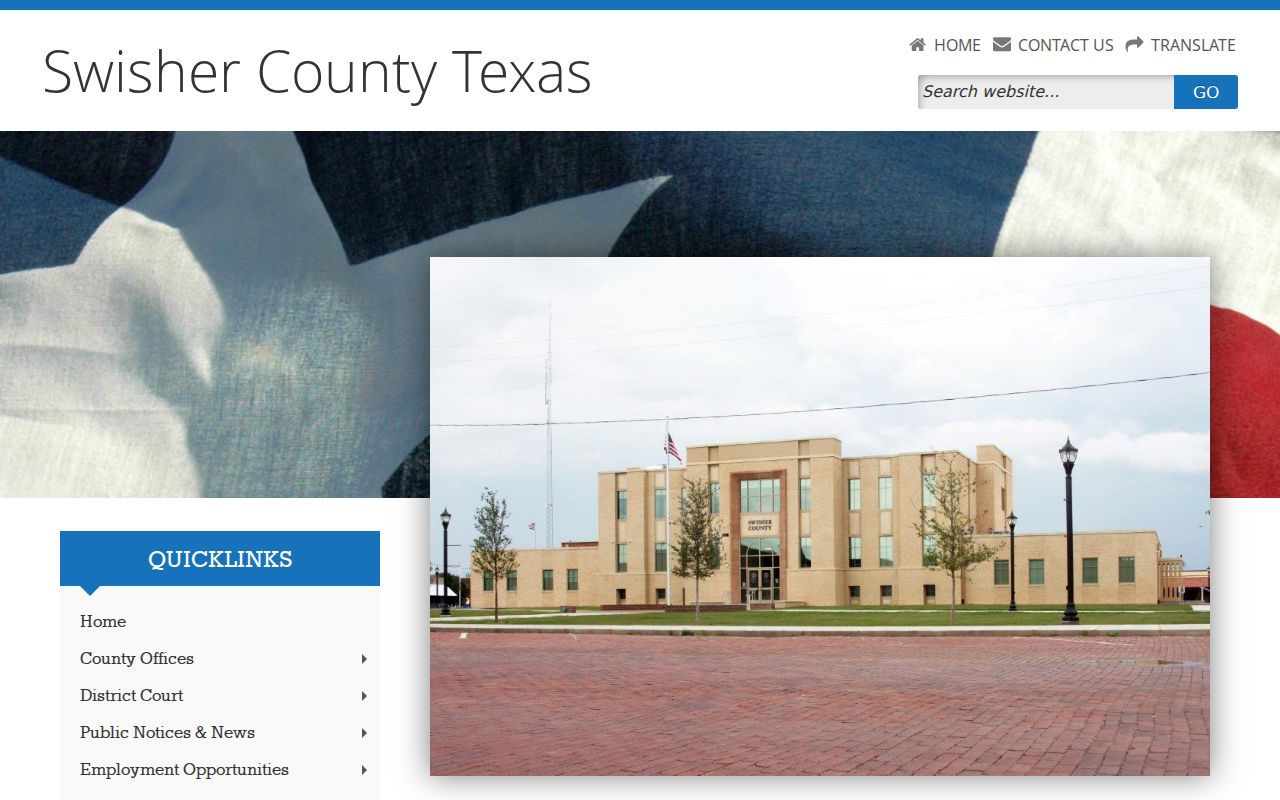
That directory helps separate the clerk, sheriff, courts, and other Swisher County record custodians before a request is sent.
Three Swisher County Record Stops
A short trip through Tulia can still cross three different records systems. The courthouse at 119 South Maxwell Avenue holds the combined clerk and the filed criminal case. The sheriff and jail at 136 East Broadway hold booking, custody, and sheriff-created report material. Tulia City Hall and Municipal Court at 127 SW 2nd Street handle city reports, citations, and fine-only municipal cases. Distance does not merge legal custody.
| Office | Record slice | Access route |
|---|---|---|
| County and District Clerk | Filed charge, docket, judgment, sentence | iDocket, public computer, email, fax, mail, counter |
| Swisher County Sheriff | Arrest report, booking, jail custody | VINELink, phone, email, fax, written request |
| Tulia Municipal Court | Fine-only city case and municipal warrant | Phone, counter, official warrant and payment links |
The split explains why a booking can exist before a prosecutor files a case and why a city citation may never appear as a district-court felony.
Texas Official Background Checks
The Texas DPS Criminal History Search is the public statewide name route. It uses a CRD Secure Website account and consumes one $1 credit per search. Credit-card purchases add 2.25 percent per credit and a $0.25 transaction fee. Check purchases cost $1 per credit but take longer to become available. Results focus on public conviction and deferred-adjudication information reported to DPS. They can show candidates, not a guaranteed identity match.
For your own identity-supported Texas record, follow the DPS personal-review instructions and schedule fingerprints through FAST, using IdentoGO by IDEMIA. No enrollment site inside Swisher County was confirmed, so use the current official location finder. The FBI Identity History Summary is a separate subject-only fingerprint product. Neither route replaces a certified Swisher County court judgment when the actual local disposition is the question.
The DPS search interface shows how account access begins before a name query is run.
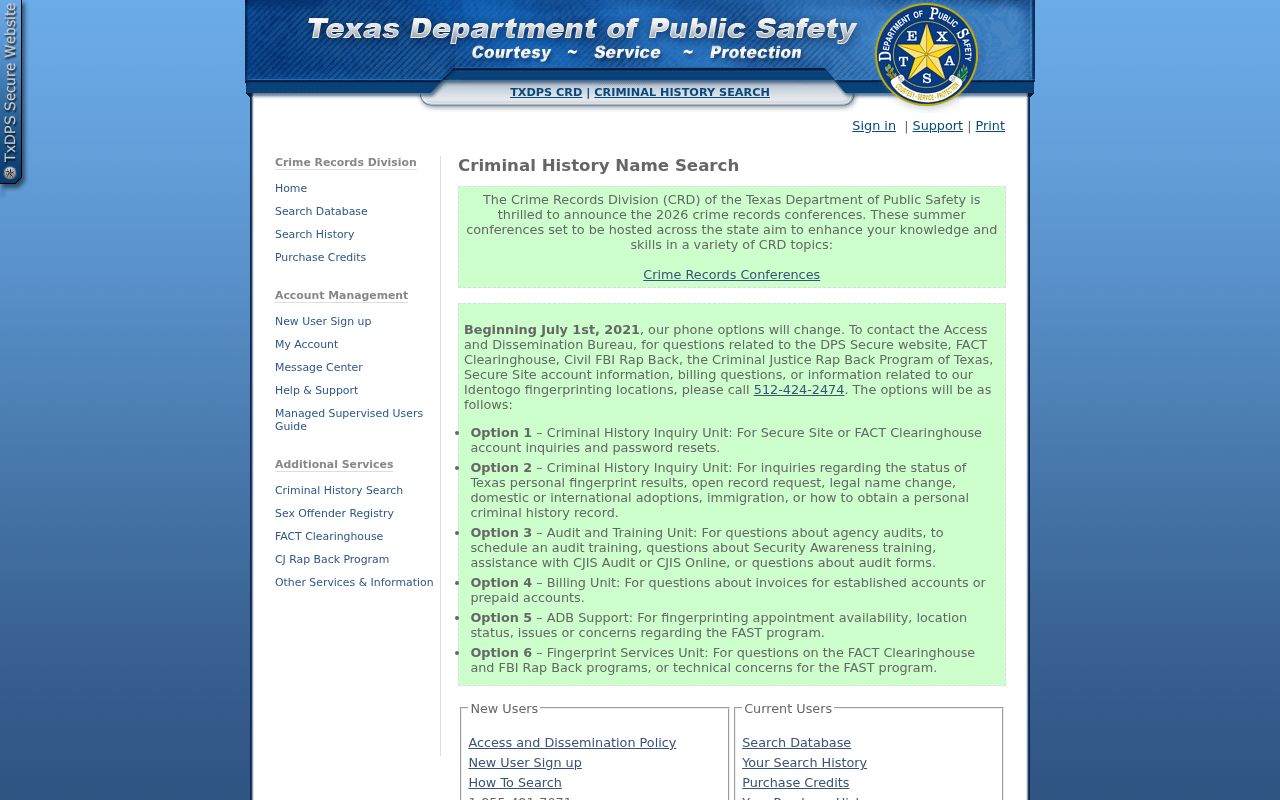
That state search should be checked against the contributing Swisher County clerk or arresting agency when a result seems incomplete or wrong.
Swisher County iDocket Records
The clerk's official index reaches back to January 1, 1992 and changes as records are entered. Select Swisher County first. Search by exact cause number when possible; otherwise use the name controls and a useful date range. Confirm the court, case type, charge, and disposition. The index may list a document without giving a free image, so note the docket entry before ordering a copy.
| Field | Use | Matching note |
|---|---|---|
| County | Select Swisher | Do not assume a prior county remains selected |
| Name or party | Search by person | Try accurate spelling variants |
| Case number | Direct cause search | Best discriminator when known |
| Case type or date | Narrow results | Options can vary with the live interface |
The county-authorized iDocket entrance presents the court index before any person is searched.

If an expected Swisher County case is missing, use either of the clerk's two free public computers or submit a narrow record request.
Criminal Record Types
One event can create several Swisher County criminal records. Each has a different author, purpose, and access rule. The fastest way to avoid a false conclusion is to identify which record answers the question.
- Incident and arrest reports describe the agency response and alleged conduct, not an adjudicated result.
- Booking records document jail intake, preliminary charges, bond, and release status.
- Court case files track the filed charge, motions, plea, disposition, judgment, and sentence.
- DPS repository histories connect reported fingerprint arrest cycles with reported outcomes.
- Warrant, supervision, custody, and registry records answer narrower legal or status questions.
Tulia police, the Swisher County Sheriff, the clerk, Texas DPS, TDCJ, and a municipal court may all hold different parts. A dismissal in the clerk file does not by itself erase the older booking entry. Juvenile and cleared records receive special limits.
Swisher County Custody Records
Swisher County does not publish a county-hosted jail roster or booking gallery. The sheriff's official page links to VINELink for custody status. Start there, call 806-995-3326 when intake or release may be too recent to appear, and request a booking sheet in writing when the public result lacks a needed field. The absence of a web result does not prove that no booking occurred.
The sheriff-linked VINELink service offers custody search and notification functions.
VINELink is a status tool, not the full East Broadway booking file. State prison custody moves to TDCJ, while federal custody belongs in the BOP locator.
Inside a Swisher County Criminal Record
A Texas computerized history groups identity data with arrest cycles and reported outcomes. A Swisher County court file instead centers on a cause number and judicial events. Read the label on each field before comparing the two.
| Name and identifiers | Names, aliases, birth details, and state or federal identifiers where lawfully displayed. |
|---|---|
| Arrest and booking | Date, agency, tracking or booking number, initial charges, bond, and release. |
| Charges and statutes | Alleged arrest offense or the later complaint, information, or indictment filed in court. |
| Disposition | Charge-level outcome such as conviction, dismissal, acquittal, or deferred adjudication. |
| Sentence | Confinement, fine, costs, community supervision, and any concurrent or consecutive terms. |
| Custody or supervision | County jail, TDCJ, parole, or court-ordered community-supervision information. |
A name-based candidate is not fingerprint identification. When reviewing your own record, compare the DPS cycle with the Swisher County cause and the originating agency's report.
Swisher County Court Record Routes
Offense level routes the case. The 64th and 242nd Judicial District Courts hear felonies. The constitutional County Court handles Class A and B misdemeanors. Justice and municipal courts handle limited fine-only matters. The combined clerk keeps county and district documents, but that shared counter does not erase the separate jurisdiction of each court.
- Complaint
- A sworn allegation that can begin a case or support a warrant.
- Information
- A prosecutor-filed charging instrument often used for misdemeanors.
- Indictment
- A grand jury accusation in a felony matter, not proof of guilt.
- Disposition
- The outcome of a charge or case.
- Deferred adjudication
- Community supervision without an immediate finding of guilt, subject to Texas rules.
The clerk's official site identifies the local judicial records counter.
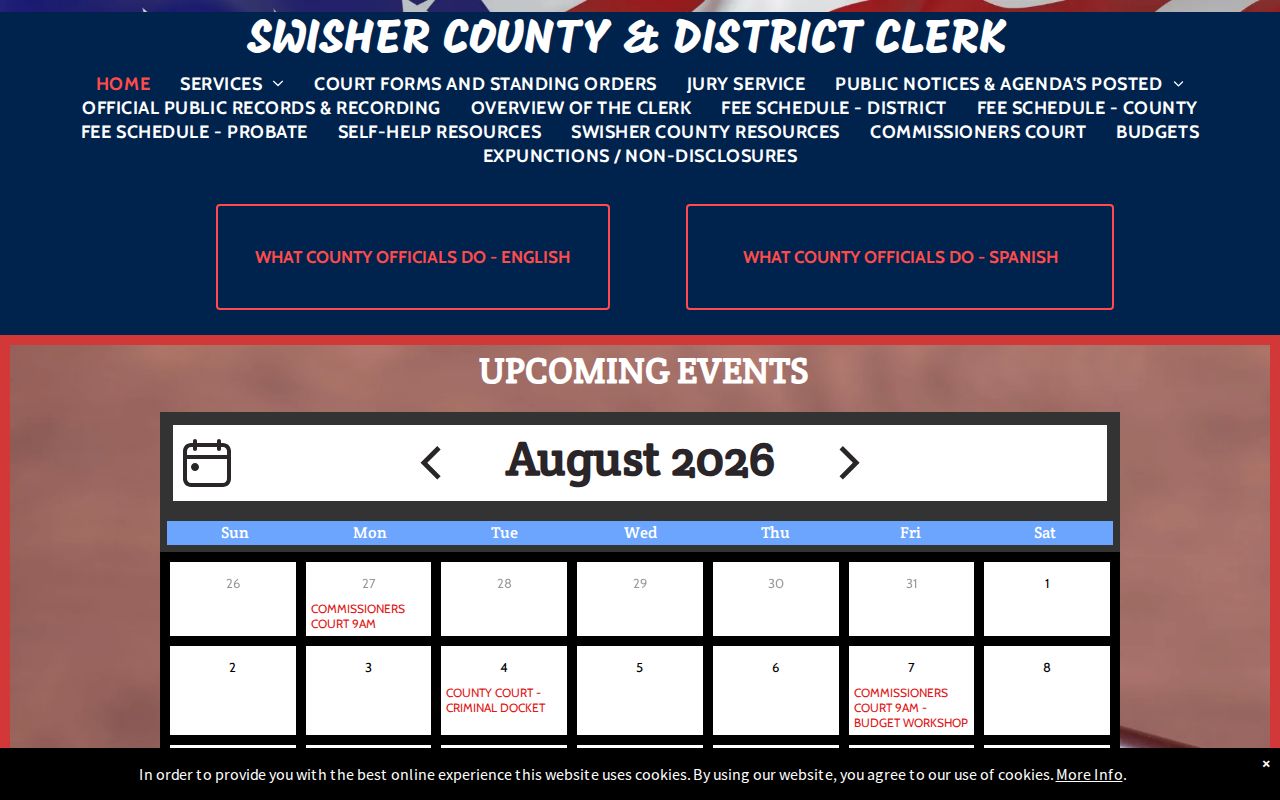
For document-level case work, that office is more useful than re:SearchTX, whose statewide public collection excludes criminal case records.
Public Access Laws in Texas
Texas separates agency records from judicial case records. The Texas Public Information Act applies to many executive and local government records, subject to exceptions. It does not govern judicial case files in the same way. Swisher County's clerk therefore uses a distinct judicial request process for filed cases. DPS public dissemination also follows the limits in Government Code Chapter 411.
Key Texas laws:
Government Code Chapter 552 governs public requests to covered government bodies and preserves statutory exceptions.
Government Code Sections 411.083 and 411.135 control criminal-history confidentiality and the public DPS subset.
Code of Criminal Procedure Chapter 55A supplies current Texas expunction law.
Code of Criminal Procedure Chapter 62 governs sex-offender registration and public registry data.
Active investigations, confidential criminal-history information, juvenile material, protected victim details, and sensitive identifiers can be withheld or redacted. Ask for segregable public portions and the legal basis for any withholding.
Swisher County Court Record Fees
The clerk permits no-charge review during normal business hours and provides two public search computers. Copies require payment before production. Its official judicial-record request page lists email, fax, mail, and counter routes and states that the office reviews requests within 10 business days for availability and cost.
| Clerk service | Posted charge |
|---|---|
| In-office judicial inspection | $0 |
| Plain judicial copy | $1 per page |
| Certified judicial copy | $1 per page plus $5 certification |
| Digital judicial copy | $1 per page through 10 pages, then $0.10 per page |
| Three-way authentication | $10 |
No sheriff report fee schedule was located. Ask the sheriff for an estimate and accepted payment method before work begins.
Sealed, Expunged, and Restricted Records
Texas uses two distinct remedies. Expunction under current Code of Criminal Procedure Chapter 55A can direct qualifying records to be removed, destroyed, or returned as the order requires. An order of nondisclosure limits public disclosure under Government Code Chapter 411 but preserves access for specified government entities. Neither remedy follows from every dismissal, and a case with several charges needs a fact-specific review.
Chapter 55A replaced former Chapter 55 on January 1, 2025. Old forms are now a practical risk. The Swisher County filing route starts with the clerk at South Maxwell. Identify the arrest and cause, obtain certified disposition records, use the correct statutory petition, list every record holder, and obtain certified copies of the signed order. The local filing and service cost was not confirmed, so request a current written quote.
The current Texas expunction chapter is the source to check before selecting a form or describing a possible remedy.
Swisher County Custody Search Layers
County jail, state prison, and federal custody searches answer different questions. VINELink is the Swisher County starting point for current local custody. TDCJ takes over when a person is in Texas state custody. The Federal Bureau of Prisons handles federal inmates. None is a general criminal-history search, and a no-result in one system says nothing conclusive about the other two.
The TDCJ Online Inmate Search accepts a name, TDCJ number, or SID number.
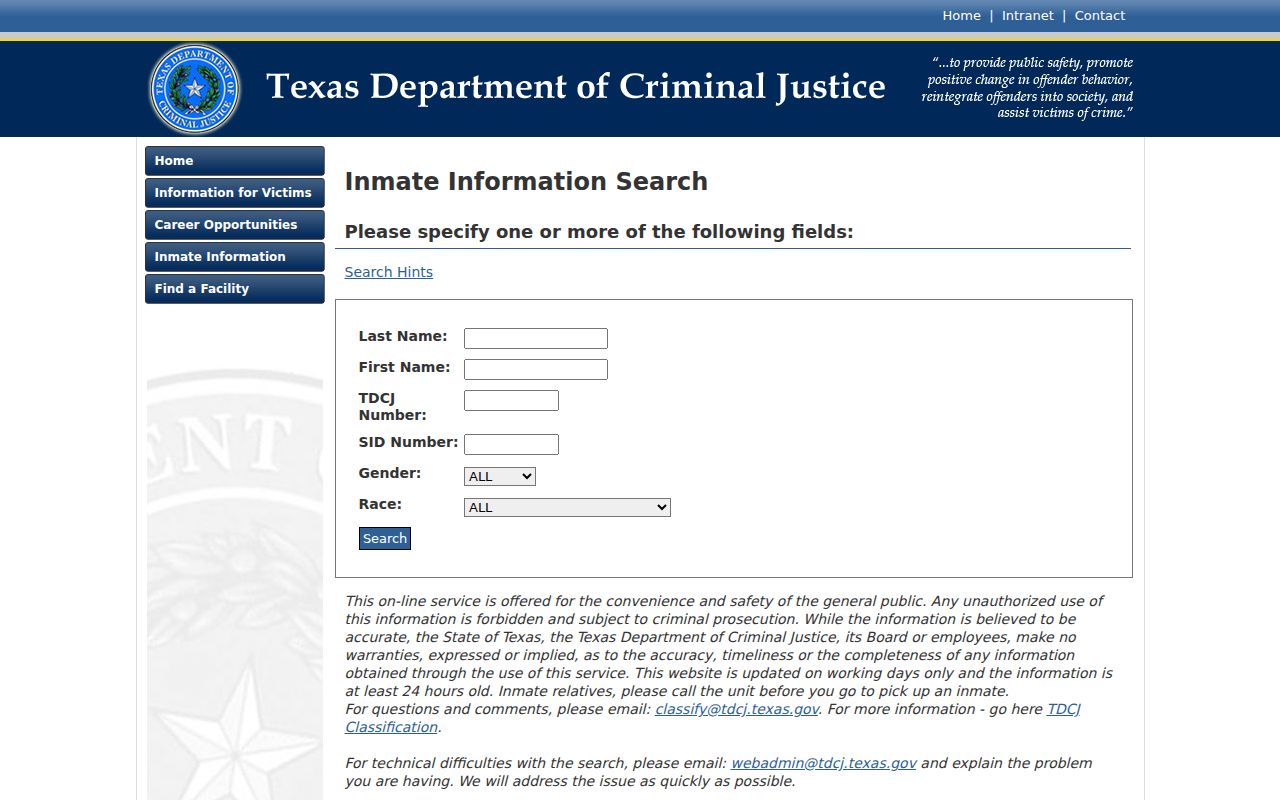
Use TDCJ only after the Swisher County jail layer is no longer the correct custodian. Community supervision is verified first through the court judgment; operational CSCD files are not a public name database.
Swisher County Registry Record Search
The Texas Public Sex Offender Registry supports name and geographic searches, including county, city, ZIP, address, and radius controls available in the live form. Select Swisher County for a county view. Search NSOPW when the geographic question crosses state or county lines, including Happy's boundary with Randall County. Use the results for lawful safety awareness and report suspected noncompliance to law enforcement rather than confronting anyone.
The official Texas DPS registry search displays the public search controls.
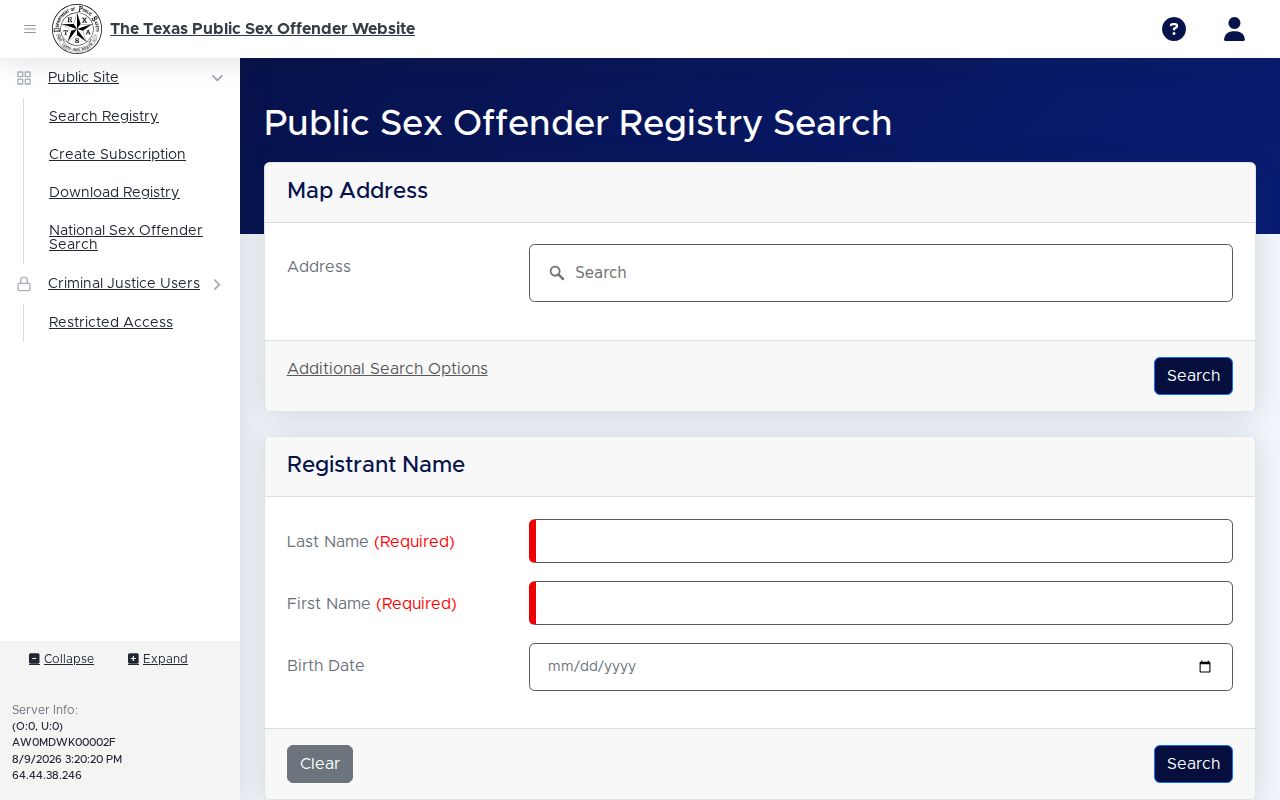
Registry data is a statutory public subset. Phone numbers, employer details, driver's-license numbers, Social Security numbers, and other protected fields do not belong in the public profile.
Swisher County Criminal Records by City
Swisher County has three incorporated municipalities. Tulia has its own police and municipal court channels before higher charges reach the county clerk. Kress has a detailed municipal court and a separate city open-records route. Happy crosses the Swisher and Randall county line, so exact location and arresting agency must be confirmed before ordering a record.
Tulia Criminal Records
Population 4,473 in the 2020 Census. City police, municipal court, sheriff, and clerk records may all apply.
Happy Criminal Records
Population 678 across the full two-county city. Confirm the county side before choosing a sheriff or clerk.
Kress Criminal Records
Population 593 in the 2020 Census. Class C matters stay with the city court; higher cases route to Swisher County.
Vigo Park is not incorporated and does not replace any of these city guides. The same city set appears in the site rail and footer.
Swisher County Criminal Record Flow
A qualifying custodial arrest starts with an officer's report. Jail intake adds fingerprints, a booking entry, and a tracking-control number. Prosecutors then decide whether and how to file. The clerk records the complaint, information, or indictment plus later docket events. The final disposition is reported back to Texas DPS and tied to the arrest cycle when identifiers match.
Record flow: Arresting agency › Swisher County jail › prosecutor › County or District Court › Texas DPS Crime Records Division.
The Swisher County sheriff page identifies the local custody office.
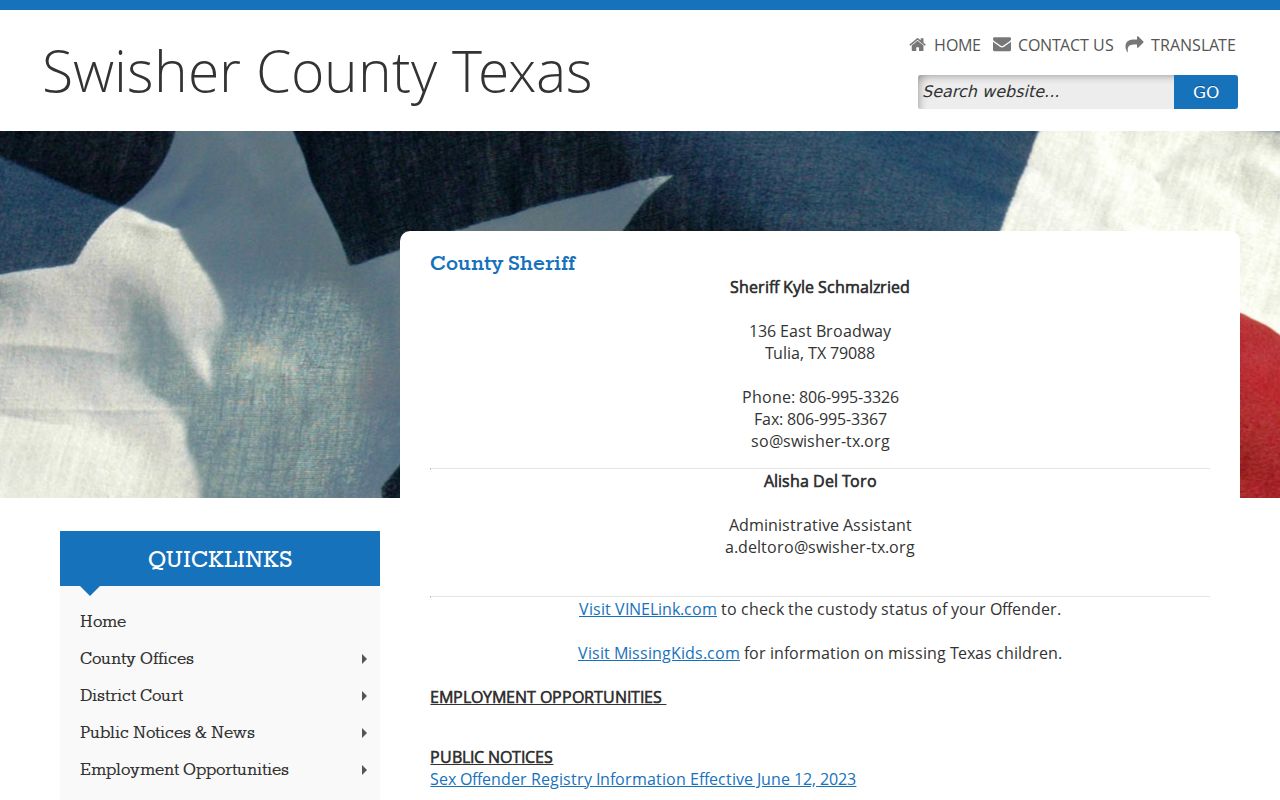
Reporting delays, old unmatched tracking numbers, and missing final dispositions can create gaps. For your own record, compare the local cause, arrest report, and DPS personal review, then ask the source agency to correct its contribution.